DeMets Lectures
The Lectures
The David L. DeMets Lectures in Health and Quantitative Investigation are a pair of lectures held on a Thursday and Friday each November.
These lectures acknowledge Dr. DeMets’ research accomplishments in forwarding the design, monitoring, analysis, and presentation of clinical trials.
The first lecture is a research/overview talk is accessible to a general biomedical/public health audience. Ideally, it will highlight in one or more ways critical and impactful contributions from quantitative methodological areas (e.g., biostatistics and/or biomedical informatics) to discoveries in biomedicine, and/or advancement of human/public health. The second lecture is a world-class research talk in biostatistics or biomedical informatics.
The lecturer chosen each year exemplifies the “David DeMets Model of Biomedical Research” with rigorous development and application of quantitative methodological principles, married with deep engagement in an area of biomedical investigation.
2026 DeMets Lectures
Lecture 1
Thursday, November 12, 2026
Health Sciences Learning Center, Room 1306
3:45-4:45 pm
In-person only
Title: With Reference to What?
Abstract: Goals and criteria, either explicit or implicit, guide much of statistical practice. In this context, I discuss statistical considerations associated with inference to a reference population, and those guided by a goal or a criterion. Reference population examples come from clinical trials, epidemiology and surveys, with “representation” an overarching issue. Goal/criterion guided examples are drawn from summarizing laboratory assays and from hospital profiling. I close with comments on a related administrative and political issue: the what and the how.
Lecture 2
Friday, November 13, 2026
Morgridge Hall Seminar Room (7560 Morgridge Hall)
Time: 12:00-1:00 pm.
In-person only
Title: Improved Small Domain Estimation via Compromise Regression Weights
Abstract:
Shrinkage estimation of small domain parameters typically combines a noisy direct estimate with a more stable regression estimate. However, if the regression model is misspecified, the “optimal” (MLE) estimate of regression parameters can degrade performance for the relatively unstable domains due to substantial shrinkage toward the misspecified regression surface. Jiang and co-authors addressed this issue via the Observed Best Predictor (OBP) that, in estimating the regression, over-weights the small domains, thereby giving more weight to those that, “care about” the regression. Going a step further, we introduced a class of empirically-informed regression weights that are a convex combination of the MLE and OBP values–a Compromise Best Predictor (CBP). The mixing parameter is found by minimizing an unbiased estimate of the mean-squared prediction error, a SURE estimate. This approach enables the CBP to preserve the robustness of the OBP while retaining the main advantages of the MLE when the regression model is well-specified. We compute performance of the MLE, OBP and CBP approaches via simulation, and compare data analysis results in estimating gait speed in older adults.
2026 DeMets Lecture Speaker
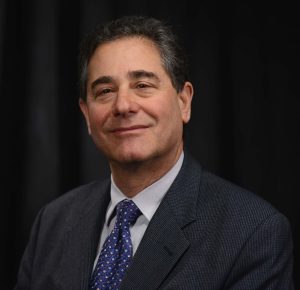
Thomas A. Louis, PhD
Professor Emeritus, Department of Biostatistics
Johns Hopkins Bloomberg School of Public Health
Thomas A. Louis (PhD in Mathematical Statistics, Columbia University; BA in Mathematics, Dartmouth College) is Professor Emeritus of Biostatistics, Johns Hopkins Bloomberg School of Public Health. Among other academic positions, he was faculty at the Harvard School of Public Health and Head of the Division of Biostatistics at the University of Minnesota. From 2013-2015 he served as Associate Director for Research & Methodology and Chief Scientist at the Census Bureau. His research includes Bayesian methods, clinical and field studies, health services research, genomics and survey methods. He is an elected member of the International Statistical Institute, a Fellow of the American Statistical Association, the American Association for the Advancement of Science, and the Institute of Mathematical Statistics; is a National Associate of the National Research Council. He is an Honorary Life Member of the International Biometric Society and holds an Honorary Doctorate from Hasselt University, Belgium. His service includes member of the National Academies’ panel evaluating the 2020 census and several other panels, member of the NIH/NIEHS Board of Scientific Counselors, coordinating editor of the Journal of the American Statistical Association, co-editor of Biometrics, and president of the International Biometric Society.
Past DeMets Lectures Events
2025 Lecture Information – Dr. Mark Gerstein
2024 Lecture Information – Dr. Janet Wittes
2023 Lecture Information – Dr. Colin Begg
2022 Lecture Information – Dr. Michael Proschan
2020 and 2021 lectures were cancelled because of SARS-CoV-2.
2019 Lecture Information – Dr. Richard Landis
2018 Lecture Information – Speaker cancelled
2017 Lecture Information – Dr. Rob Tishirani